WATERCOLOR NOTES #05
Contents
Same Color, Different Results: Why Does This Happen?
One of the fascinating aspects of watercolor painting is how the same color can produce very different effects depending on the amount of water, the moisture level of the paper, and the way the brush is handled.
This is why controlling water and pigment is considered one of the essential skills in watercolor painting.
How Does Paper Moisture Affect Watercolor?
When watercolor paint is applied to wet paper, the pigment tends to spread with the water across the surface, creating soft washes and gentle color transitions.
On dry paper, the paint generally spreads less, allowing artists to maintain greater control over brushstrokes, shapes, and edges.
The degree of spreading also depends on the amount of water on the brush, the absorbency of the paper, and the characteristics of each pigment.
How Do Water and Pigment Affect Color Intensity?
In addition to paper moisture, the ratio of water to pigment plays an important role in the final result.
More water, less pigment: Usually creates lighter, more transparent washes, suitable for highlights or initial layers.
Less water, more pigment: Generally produces stronger, darker colors, useful for creating shadows and increasing contrast.
Adjusting the amount of water on the brush: Helps control how much paint is applied to the paper and reduces unwanted spreading.
However, too little water can make the paint difficult to spread evenly, while too much water can make it harder to control the shape of a wash.
Finding the right balance takes practice and depends on the technique being used.
Practicing Water and Pigment Control at Lam Art
In Lam Art's adult watercolor classes, students explore these principles through a painting exercise featuring pumpkin slices.
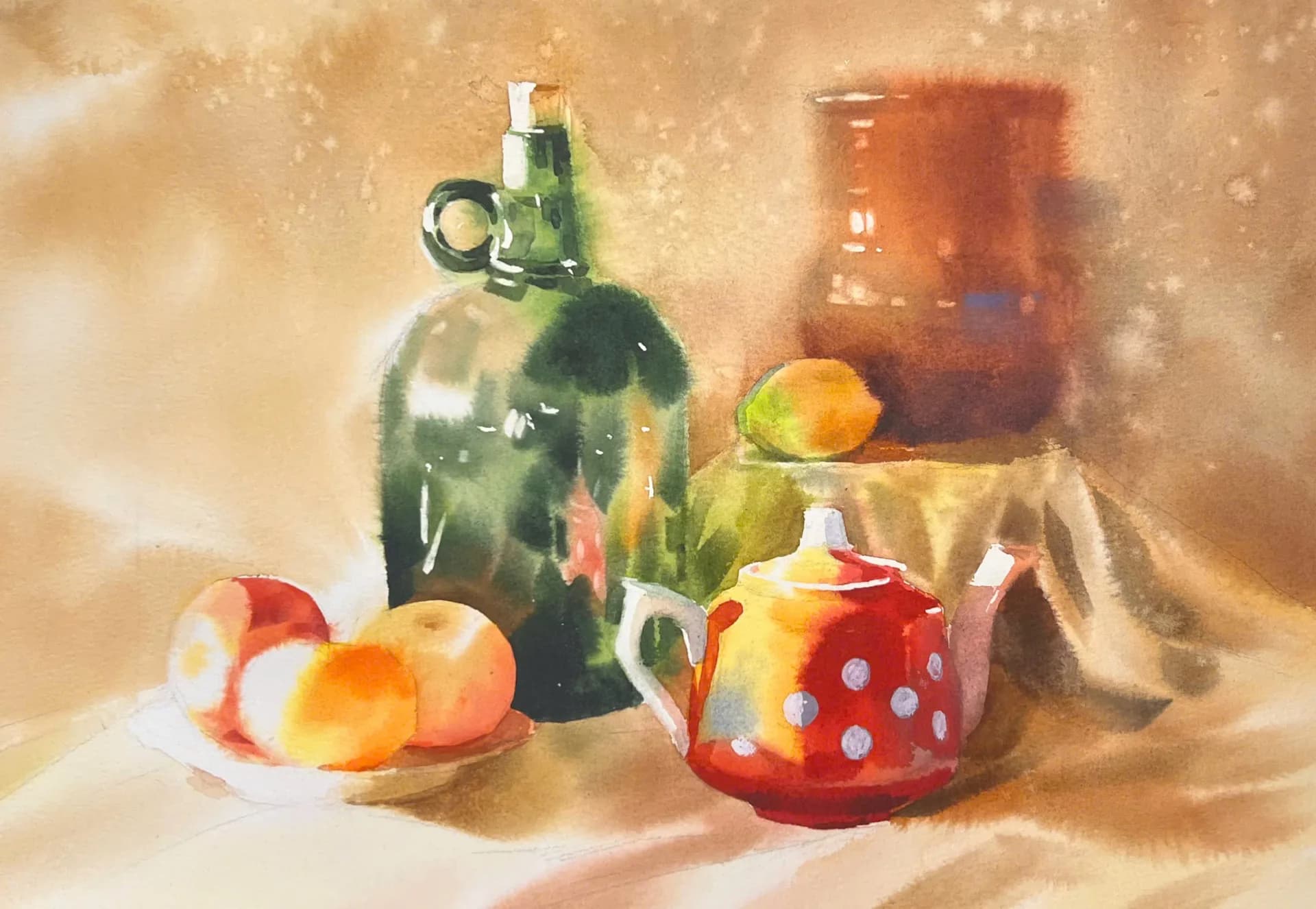
Working with the same subject, students experiment with paper moisture, the amount of water on their brushes, and different color values to observe how each adjustment affects the result.
On wet paper, colors can spread and blend naturally. As the paper becomes drier, the edges of painted areas become more defined. Changing the water-to-pigment ratio also creates different shades of orange, ranging from light and transparent to rich and intense.
Through repeated practice, students gradually become more familiar with how watercolor behaves on paper and learn to choose techniques that suit the effects they want to achieve.
Developing Control Through Practice
For beginners, a useful exercise is to paint the same simple shape several times while changing the moisture level of the paper and the amount of water on the brush.
Observing and comparing the results helps develop a better understanding of watercolor, beyond simply memorizing technical principles.
Understanding how water, pigment, and paper interact allows artists to gain greater control over color values, blending effects, and layered washes.
Watercolor Notes by Lam Art
Watercolor Notes is a series of articles by Lam Art Studio, sharing essential watercolor knowledge and techniques for art enthusiasts and anyone beginning their journey with this medium.