WATERCOLOR NOTES #02
Contents
3 Essential Watercolor Painting Techniques
One of the most fascinating aspects of watercolor painting is how pigment and water interact on paper. Simply changing the moisture level of the paper, the amount of water on the brush, or the way paint is applied can create remarkably different effects.
Here are three essential watercolor techniques that every beginner should explore.
1. Dry on Dry – Painting on Dry Paper
Dry on Dry involves applying watercolor paint to dry paper using a brush with relatively little water.
With less moisture on both the paper and the brush, the paint spreads less, allowing artists to maintain greater control over brushstrokes, shapes, and fine details.
This technique is particularly useful for creating defined edges, adding details, and suggesting textures.
2. Wet on Wet – Painting on Wet Paper
Wet on Wet involves applying watercolor paint to paper that has been dampened or is still wet.
As the pigment meets the water on the paper, colors spread and blend naturally, creating soft transitions and flowing effects.
The amount of spreading depends on the moisture level of the paper, the amount of water on the brush, and the characteristics of the pigment. This technique is commonly used to paint skies, clouds, water, and areas with gentle color transitions.
3. Layering – Building Color Through Layers
Layering is a technique in which multiple layers of watercolor are applied to the same area, usually allowing each layer to dry before adding the next.
Because watercolor is often transparent, underlying colors can remain visible through subsequent layers. This allows artists to adjust tonal values, create depth, and develop richer color variations.
When practicing layering, it is helpful to begin with lighter washes and gradually build up darker values for better control.
Combining Techniques in a Watercolor Painting
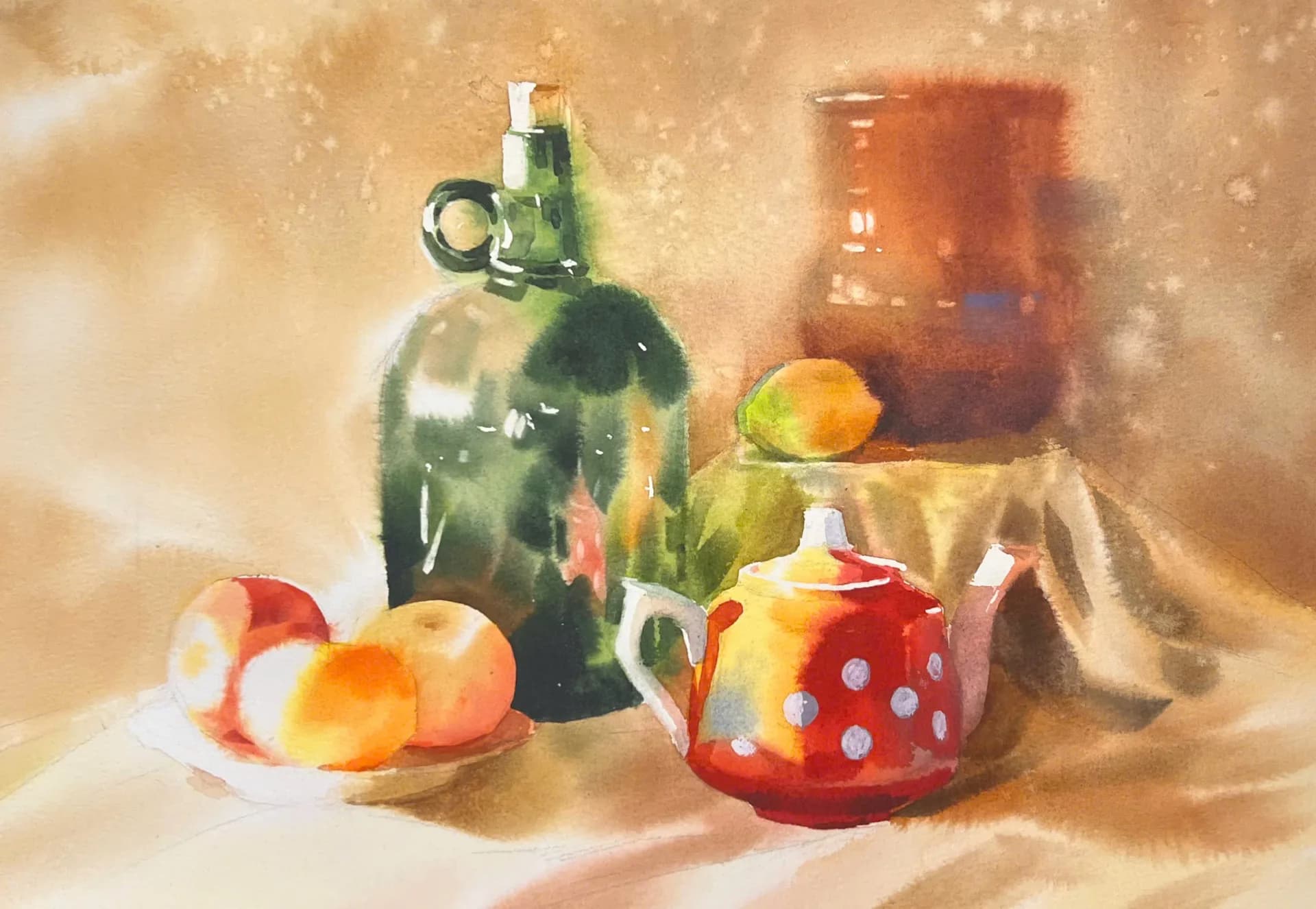
Each technique produces its own distinctive effects, but artists often combine all three within a single painting.
Understanding how to use Dry on Dry, Wet on Wet, and Layering helps beginners gain greater control over watercolor and choose the most suitable approach for different areas of their artwork.
Watercolor Notes by Lam Art
Watercolor Notes is a series of articles by Lam Art Studio, sharing essential watercolor knowledge and techniques for art enthusiasts and anyone beginning their journey with this medium.