WATERCOLOR NOTES #01
Contents
What Is Watercolor Paint Made Of?
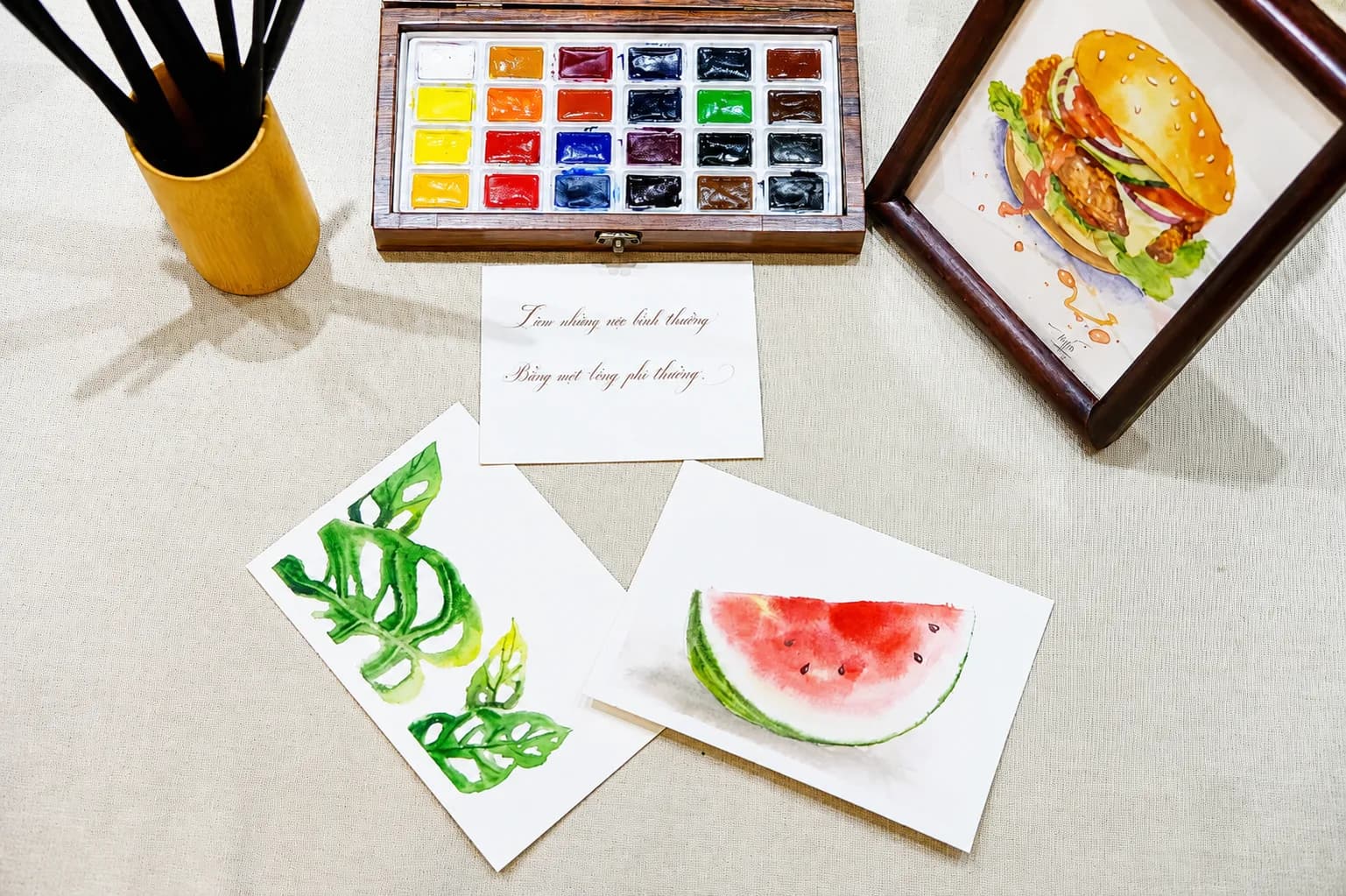
Watercolor is a painting medium made from pigments and a water-soluble binder, most commonly gum arabic.
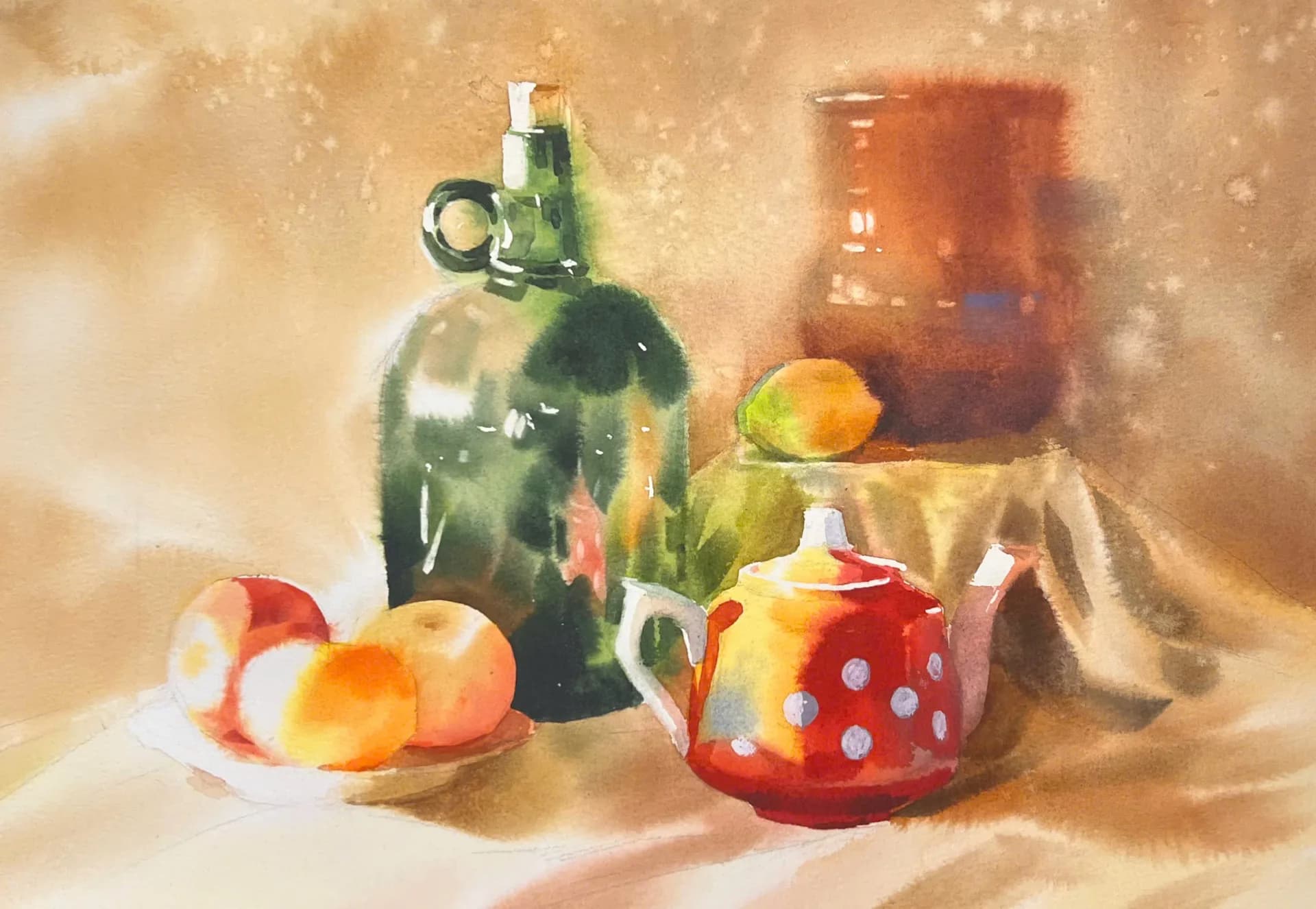
When mixed with water, the paint can be applied in thin, transparent layers, allowing light to reflect off the paper through the pigment. This transparency is one of the distinctive qualities that gives watercolor paintings their unique character.
From Three Primary Colors to a World of Colors
One of the first things to learn when working with watercolors is how colors interact and mix with one another.
According to traditional color theory in painting, the three primary colors are:
Red
Yellow
Blue
By mixing these primary colors, we can create three secondary colors:
Red + Yellow = Orange
Yellow + Blue = Green
Red + Blue = Purple
The actual results of color mixing depend on the hue and characteristics of each pigment. For example, two different shades of red mixed with the same blue can produce noticeably different shades of purple.
By adjusting the proportions of each color, artists can create a wide range of hues, shades, and color variations.
The Color Wheel – An Essential Tool for Learning Color Theory
Based on the principles of color mixing, the Color Wheel is a visual tool that helps artists understand the relationships between different colors.
It introduces beginners to color combinations, complementary colors, and harmonious color schemes, providing a useful foundation for applying color theory to their artwork.
For those just starting out, experimenting with color mixing and observing how colors change is a simple yet valuable way to become familiar with watercolor painting.
Watercolor Notes by Lam Art
Watercolor Notes is a series of articles by Lam Art Studio, sharing essential watercolor knowledge and techniques for art enthusiasts and anyone beginning their journey with this medium.