The Essential Supplies You Really Need
Getting Started with Watercolor: The Essential Supplies You Really Need
When you first start learning watercolor painting, it's easy to be drawn to colorful paint sets, brushes in every size, and different types of watercolor paper.
However, you don't need a large collection of supplies to get started. A few carefully chosen essentials are enough to begin exploring basic watercolor techniques.
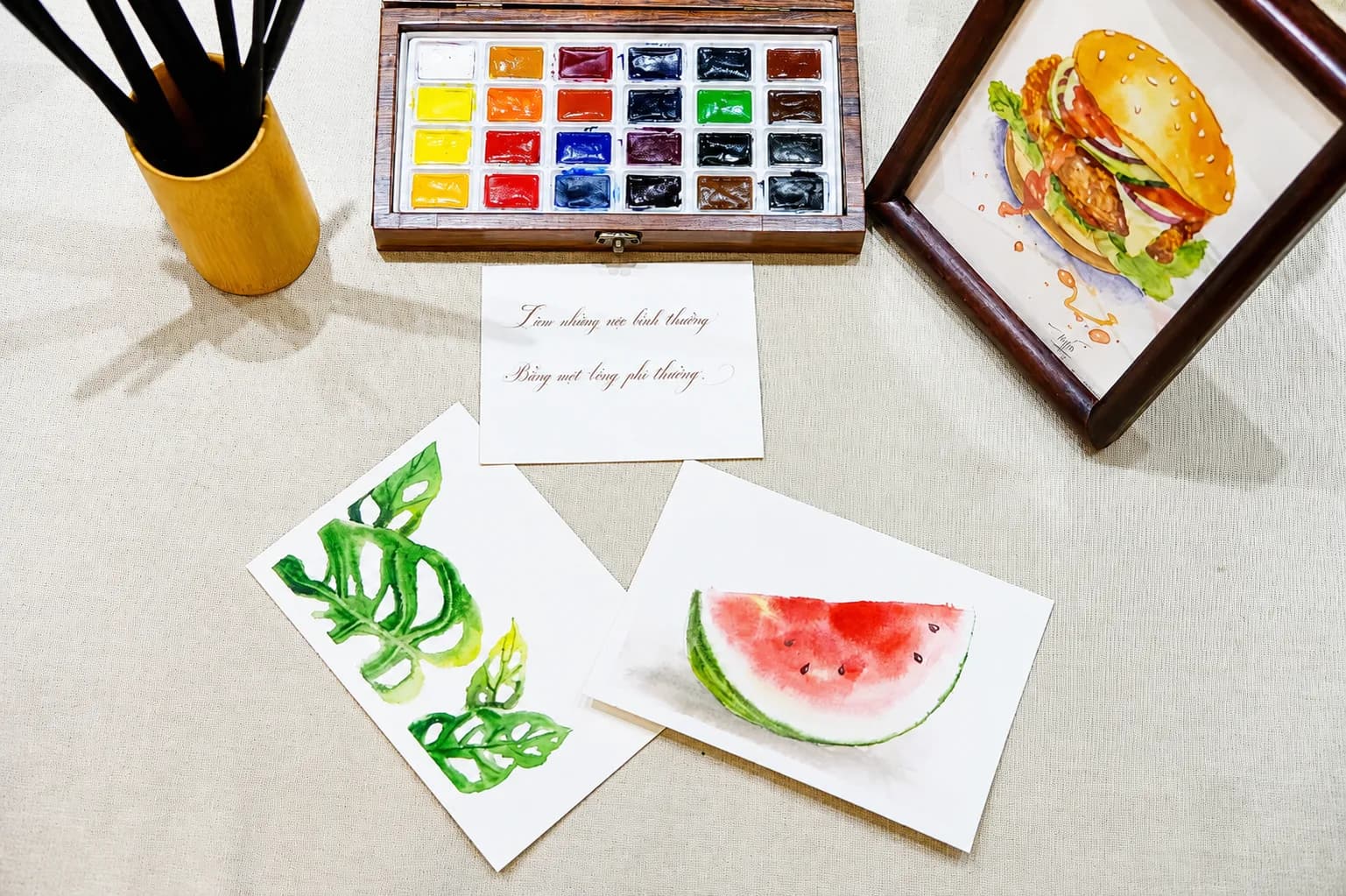
1. Watercolor Paints – You Don't Need Too Many Colors
Watercolor paints generally come in two common forms:
Pan Watercolors: Compact, easy to store, and convenient to carry.
Tube Watercolors: Easy to dispense and mix in larger quantities, making them useful for painting broad areas.
Both types are suitable for beginners. A basic set of 6–12 colors is enough to practice color mixing and explore how different colors work together.
What matters most isn't how many colors you own, but how well you understand and use them.
2. Watercolor Paper – An Important Part of Your Painting Experience
Paper directly affects how watercolor spreads, absorbs, and behaves on the surface.
Unlike regular drawing paper, watercolor paper is designed to handle more water, making it suitable for wet-on-wet techniques and multiple layers of paint.
When choosing watercolor paper, consider two main factors:
Paper Weight: 300 gsm paper is a popular choice because it handles water well and is less likely to buckle than thinner paper.
Paper Texture: Cold Press paper has a slightly textured surface and works well with many basic watercolor techniques. Hot Press paper is smoother and suitable for detailed work.
Lam Art's Tip: For beginners, 300 gsm Cold Press watercolor paper is a versatile choice for practicing different techniques.
3. Watercolor Brushes – Just a Few Are Enough
You don't need a large brush collection when you're starting out.
Two or three basic brushes can handle most beginner exercises:
Medium Round Brush: Useful for painting shapes, color washes, and general brushwork.
Small Round Brush: Ideal for fine lines and smaller details.
Flat Brush: Helpful for wetting the paper or applying color over larger areas.
Good-quality synthetic brushes are a practical choice for beginners. They are easy to maintain and available at different price points.
4. Basic Accessories
Along with paints, paper, and brushes, a few simple accessories will make your painting sessions easier:
Mixing Palette: Choose a light-colored surface so you can see your mixed colors clearly.
Two Water Containers: One for rinsing brushes and another for clean water.
Paper Towels or a Cloth: Useful for controlling the amount of water on your brush.
Pencil and Eraser: For lightly sketching your subject before painting.
Drawing Board and Masking Tape: Helpful for securing your paper when needed.
Start with the Basics
Expensive art supplies don't automatically lead to better paintings. What matters more is understanding how watercolor works and making time to practice.
With a basic paint set, a few brushes, and suitable watercolor paper, you already have everything you need to begin exploring color mixing, water control, and your first watercolor techniques.
Start with just the essentials, and gradually add new supplies as you become more familiar with the medium and discover what works best for you.
Watercolor Notes by Lam Art
Watercolor Notes is a series of articles by Lam Art Studio, sharing essential watercolor knowledge and techniques for art enthusiasts and anyone beginning their journey with this medium.